
 News
Views: 0 Author: Site Editor Publish Time: 2026-09-26 Origin: Site


You are in the middle of a time-sensitive assay, reaching for a transfer tool, only to realize the tip is too wide for your micro-vial. It is a frustrating, yet incredibly common scenario on the bench. Lab technicians frequently struggle to find the exact liquid handling instrument for their specific needs. Using the wrong tool inevitably causes wasted time, inaccurate dosing, and compromised daily results.
In this engineering-focused guide, we will break down exactly how to specify the right tool for your workflow. We will explore the critical technical nuances of capacity, graduation accuracy, sterility, and tip geometry to ensure your next procurement decision directly enhances laboratory efficiency.
Key Takeaways for Lab Managers
Volume Specification: Select a 1mL or 3mL capacity based on your specific sample size to prevent hand fatigue and ensure droplet control.
Visual Precision: A molded-in scale provides quick volume estimations for semi-accurate reagent additions without the setup time of mechanical pipettes.
Contamination Control: Gamma or EO-sterilized options are mandatory for cell culture, while non-sterile versions reduce costs for basic chemistry.
Tip Geometry: Standard, fine, wide-bore, and extra-long tips dictate the exact drop size and shear force applied to your sample.
Material Safety: Flexible low-density polyethylene (LDPE) construction mitigates the severe laceration risks associated with fragile glass alternatives.
A plastic Pasteur pipette functions as a single-use, all-in-one liquid handling device. It integrates a hollow stem with a compressible bulb, eliminating the need for separate rubber attachments. Designed for the rapid, safe transfer of uncalibrated or semi-calibrated fluid volumes, these tools have become the backbone of modern scientific, clinical, and industrial environments. In professional procurement catalogs, you will frequently see these instruments listed under technical terms like the PE transfer pipette.
The industry standard material for these consumables is Low-Density Polyethylene (LDPE). From a materials engineering perspective, LDPE is selected for its highly specific physical properties. It is inherently non-toxic, transparent enough for visual fluid inspection, and offers excellent chemical resistance to most aqueous solutions, mild acids, and bases. The molecular structure of LDPE allows the bulb to be compressed repeatedly without stress-cracking. This ensures consistent suction and dispensing pressure throughout a multi-step procedure.
Historically, laboratories relied on fragile glass pipettes. While glass offers superior resistance to harsh organic solvents like hexane or benzene, it presents massive safety liabilities. The transition to disposable plastic completely eliminates glass-related lacerations. Because they are designed for single use, these plastic variants remove labor-intensive washing and autoclaving protocols, cutting operational downtime and eradicating cross-contamination between sample batches.
Recent shifts in clinical diagnostics and biomanufacturing highlight a massive migration toward single-use, pre-sterilized consumables. Driven by increasingly stringent GMP (Good Manufacturing Practice) and GLP (Good Laboratory Practice) compliance standards, lab directors are actively phasing out reusable glassware. The cost of validating washing and sterilization procedures for glass often far exceeds the procurement cost of disposable plastics. Furthermore, as high-throughput screening and PCR-based diagnostics become standard, the zero-tolerance policy for DNA/RNA cross-contamination has cemented the disposable LDPE pipette as an absolute necessity rather than just a convenient alternative.
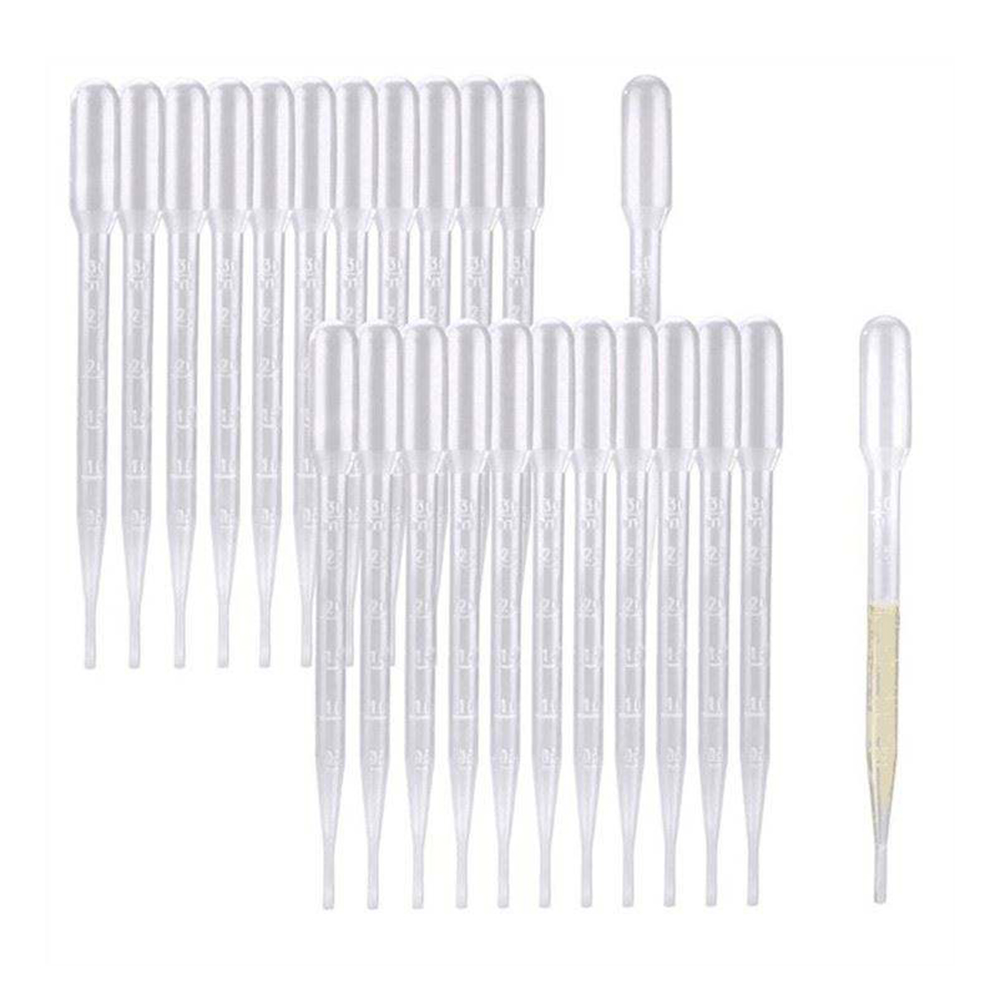
Selecting the appropriate capacity is not just about fluid volume; it is about ergonomics and workflow pacing. The volume of the pipette dictates how much liquid can be drawn in a single compression, the physical size of the dispensed droplets, and the thumb pressure required by the technician.
The 1mL capacity is engineered specifically for micro-volume transfers. Because the bulb is smaller, it requires minimal thumb pressure. This allows technicians to dispense fluid one minute drop at a time without straining their hands during repetitive tasks. This specification is highly recommended for loading agarose gels, separating delicate blood serum, blending essential oils, or aliquoting small volumes into 96-well plates where a slight over-addition could ruin an assay.
For general laboratory handling, the 3mL capacity is universally recognized as the workhorse standard. It features a larger bulb and a wider stem, making it highly efficient for moving larger fluid volumes quickly. The larger bulb significantly reduces hand fatigue when a technician needs to transfer several dozen milliliters across multiple tubes. Optimal use cases include mixing reagents, transferring urine samples, extracting supernatants after centrifugation, and general pH adjustments.
While 1mL and 3mL represent the core of daily operations, macro-volume pipettes (typically 5mL or 10mL) are utilized for bulk fluid transfers, such as moving media in cell culture hoods. However, for everyday precise control, the 1mL and 3mL sizes remain the absolute standard.
In routine procedures, technicians frequently need to know the approximate volume of liquid being transferred without the time-consuming setup of analytical volumetric glassware. This is exactly where a graduated Pasteur pipette becomes highly valuable.
High-quality models feature clear, molded-in volume marks located along the transparent stem. Unlike printed marks on cheaper alternatives that can dissolve when exposed to reagents, molded graduations are permanent. Choosing a graduated model bridges the operational gap between rough visual estimation and high-precision liquid handling.
If a protocol requires the addition of approximately 0.5 mL of a buffer, a graduated stem allows the technician to draw and dispense this exact amount rapidly. However, you must maintain objective expectations regarding accuracy. Graduated LDPE pipettes typically offer an accuracy variance of ±10% to ±15%. They are perfect for semi-accurate reagent additions and routine dilutions. If your protocol demands highly precise, calibrated transfers, you must utilize a serological pipette or an electronic micropipette to ensure data integrity.
Contamination control is a critical parameter in laboratory management. The choice between sterile and non-sterile packaging directly impacts both the integrity of your results and your consumable budget.
Sterility is strictly non-negotiable in environments where biological contamination can invalidate an experiment. A sterile Pasteur pipette is mandatory for microbiology inoculations, mammalian cell culture media handling, PCR preparation, and clinical diagnostics involving human tissues or blood. Premium manufacturers utilize Ethylene Oxide (EO) or Gamma irradiation to achieve a guaranteed Sterility Assurance Level (SAL).
To maintain this sterility until the exact moment of use, pay attention to packaging formats. Individually wrapped peel-packs (medical-grade paper and plastic film) are ideal for strict aseptic techniques. Conversely, bulk-packed sterile options (packs of 10 or 20) are designed for high-throughput environments, such as inside a laminar flow hood where a technician will rapidly consume multiple pipettes during a single session.
Procuring sterile consumables incurs higher manufacturing costs. For many applications, non-sterile options offer significant savings. Non-sterile pipettes are entirely sufficient for general chemistry labs, industrial QA testing, educational demonstrations, and handling harsh dyes where biological contamination is simply not a variable.
The physical geometry of the pipette tip fundamentally alters its functionality. The taper and orifice size determine the dispensed drop size and how the fluid interacts with the sample vessel. Selecting the correct tip style prevents costly sample loss and cellular damage.
Tip Style | Design Characteristics | Best Applications |
|---|---|---|
Standard Tip | Moderate taper, standard orifice. Delivers average, consistent drop sizes. | General aqueous solutions, buffers, routine test tube transfers. |
Fine Tip (Micro) | Narrow drawn-out diameter. Restricts flow for highly controlled, small droplets. | Electrophoresis gel loading, essential oil blending, delicate cell handling. |
Extra-Long Tip | Extended stem (often 9 to 12 inches). Reaches deep without tilting the vessel. | Volumetric flasks, tall graduated cylinders, large reagent bottles. |
Wide-Bore Tip | Enlarged orifice with minimal taper. Reduces shear stress on samples. | Viscous liquids, algae samples, thick cellular homogenates, slurries. |
Understanding technical specifications is only the first step. The true value of a plastic transfer tool becomes apparent when mapped to specific workflows. Different industries carry vastly different handling protocols.
In life science laboratories, fine-tip variations are heavily utilized. They allow researchers to manipulate delicate biological samples with minimal shearing force, while the soft plastic prevents scratching the treated surfaces of tissue culture flasks. In clinical environments like blood banking, technicians rely on the 3mL capacity to carefully draw off serum from centrifuged tubes without disturbing packed red blood cells. The shatterproof nature of LDPE protects healthcare workers from exposure to bloodborne pathogens.
Beyond the bench, environmental scientists rely heavily on molded-in graduation marks to estimate water sample volumes in the field without carrying fragile analytical gear. Even in the DIY cosmetics and essential oil blending industries, users require precise drop control to formulate recipes, making the 1mL fine-tip pipette an invaluable, cost-effective tool.
For procurement managers and laboratory directors, selecting the right consumable supplier is critical. Purchasing these items by the tens of thousands means that a minor manufacturing defect—such as uneven bulb thickness—can lead to widespread experimental errors, inconsistent suction, or financial waste.
When evaluating suppliers, examine the material consistency. A high-quality LDPE bulb will compress smoothly and return to its original shape instantly. For graduated models, ensure the marks are deeply molded and easy to read under stark laboratory lighting. If your facility operates under GLP or ISO standards, your consumables must come with appropriate documentation, such as lot-specific Gamma irradiation certificates.
To ensure you are evaluating premium materials and matching the exact specifications to your protocol, it is highly recommended to source from comprehensive lab plastic ware catalogs. Balancing cost efficiency with strict quality metrics is the only way to prevent workflow disruptions.
Evaluate your current laboratory inventory today. By taking the time to specify the correct volume, graduation, sterility, and tip style, you drastically improve your team's efficiency and data accuracy. Ready to upgrade your liquid handling workflow? Visit Liquan Lab (liquanlab.com) to explore a fully documented, professional-grade selection of plastic Pasteur pipettes engineered for your specific application.
Generally, no. These instruments are explicitly designed for single use to prevent cross-contamination between samples, which is critical in analytical chemistry and biological sciences. Furthermore, LDPE material cannot withstand the high temperatures of an autoclave without melting. The capillary nature of the narrow stem makes it nearly impossible to clean and dry the inside thoroughly, leaving residual chemicals or moisture that will ruin subsequent assays.
The primary differences lie in material safety, convenience, and cost. A traditional glass pipette requires the user to manually attach a separate rubber bulb, is highly fragile, and poses a significant laceration hazard. It is typically washed and reused, requiring dedicated labor. In contrast, a PE (polyethylene) transfer pipette is manufactured as a single, integrated unit. It is shatterproof, flexible, ready to use immediately out of the packaging, and designed to be safely discarded after a single use.
They are designed for quick, semi-quantitative volume estimations, not for high-precision analytical measurements. Typically, the molded graduations have an accuracy tolerance of roughly ±10% to ±15%. They are perfect for tasks like adding a buffer until a pH change occurs. However, they should never replace precision instruments like calibrated micropipettes when strict volumetric accuracy is required.
Yes, for the vast majority of routine laboratory applications. LDPE is highly inert and provides excellent resistance to biological fluids, aqueous solutions, mild acids, and mild bases. However, LDPE is not universally resistant. It should not be used with strong, concentrated oxidizing acids (like concentrated nitric acid) or aggressive organic solvents (such as hexane, benzene, or chlorinated hydrocarbons), as these harsh chemicals can quickly degrade or dissolve the plastic.
Drop size depends entirely on the tip geometry and the surface tension of the liquid. For a standard tip dispensing water, the drop size is typically around 40 to 50 microliters (µL), meaning you get about 20 to 25 drops per milliliter. Fine-tip (micro) pipettes restrict the flow further, often producing smaller drops in the range of 20 to 25 µL (roughly 40 to 50 drops per milliliter), which is ideal for precision dosing.
You generally cannot sterilize them in a standard laboratory setting. Because they are made of Low-Density Polyethylene (LDPE), they will melt and deform at the high temperatures (121°C) required for autoclaving. If your workflow requires sterility, you must procure pre-sterilized pipettes that have been treated at the manufacturing facility using cold sterilization methods, such as Ethylene Oxide (EO) gas or Gamma irradiation.


